
QSP for Disease,
Drug Effect and Clinical
Trial Simulations
Understanding the complex interplay between disease mechanisms, drug actions, and patient physiology is essential for designing effective therapies and advancing personalized medicine.
While PBPK modelling mainly addresses the mechanisms underlying pharmacokinetics of a drug, Quantitative Systems Pharmacology (QSP) models address the mechanism related to drug effects, disease (progression) and translation into clinical endpoints. Our Disease, Drug Effect, and Trial Modeling service integrates sophisticated computational models to capture these dynamic relationships, offering an advanced framework for simulating therapeutic effects, potential adverse events, and biomarker responses in diverse disease contexts.
By integrating biological, chemical, and clinical data, this approach creates a holistic view of drug-disease interactions, supporting comprehensive assessments of efficacy and safety. These insights empower drug developers to make well-informed decisions for therapeutic strategies, optimize dosing regimens, and design clinical trials that better predict real-world outcomes, ultimately enhancing the success of drug candidates and tailoring treatments to patient needs.
Physiologically based biopharmaceutics modeling (PBBM) is a specific field of PBPK model applications that aims to establish the link between the formulation’s properties and in vivo performance.
This field of application of PBPK modeling is evolving at a fast-pace and offers the link between in vivo and in vitro to support pharmaceutical development in the selection of the best drug substance and product, as well as later in development in the establishment of manufacturing quality and controls.
Dissolution testing is often a key input in PBBM. Results from in vitro experiments characterizing drug substances and the formulation behavior (e.g., solubility, particle size, dissolution) can be linked to key ADME parameters and integrated into full PBPK models to predict PK exposure in plasma and/or specific tissues or organs.
These models can also be linked to Pharmacodynamic (PD) relationships to derive the impact of physicochemical, drug and formulation properties on safety and efficacy. The role of Physiologically Based Biopharmaceutics Modeling (PBBM) in drug development spans multiple stages, including supporting patient-centric design, guiding life cycle management, informing regulatory submissions, streamlining development processes, optimizing dosing strategies, enhancing study design, and aiding in formulation development and developability assessment.

What we can offer
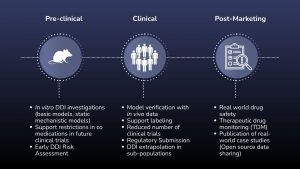
ESQlabs offers advanced modeling services that link pharmacokinetics and pharmacodynamics with disease-specific pathways and biomarker dynamics. We use Physiologically Based Pharmacokinetic (PBPK) modeling to simulate the pharmacological impact of drugs within disease contexts, and we incorporate customized effect models tailored to specific conditions. These models help assess drug candidate efficacy, safety profiles, and biomarker relevance, ultimately enhancing patient-specific treatment plans. From early discovery to clinical validation, our models support each stage of drug development with high predictivity and regulatory compliance.
Related Platforms

Large Molecules, Biologics and Novel Modalities

QSP Disease and QST Models

Women’s Health

Digital Twins for Micro-physiological Systems: MPSlabs
Related publications and initatives
Meet the Team

Alexander Kulesza
Alexander is a Chemist by training with a PhD focusing on theoretical and computational methods for structural and optical property predictions.
After spending several years in academia (U. of Lyon) working on molecular dynamics simulation and free energy methods, Alex has most recently been working with CROs in applying large-scale disease and quantitative systems pharmacology models integrated into clinical trial simulations, across a number of disease areas.
Alex leads QSP/T and qAOP / Systems Pharmacology with the aim to promote widespread application of physiologically based and mechanistic modeling and to create robust and qualified, yet versatile models and applications for high impact decision making.
Diane Lefaudeux
Diane Lefaudeux is an interdisciplinary scientist with a strong drive to understand complex mechanisms and in particular those arising from biological systems.
Before joining ESQlabs, she worked at Novadiscovery where she developed PBPK-QSP models on various therapeutic areas to predict outcomes using virtual populations.
Diane obtained her Master’s degree in General Engineering from École Centrale Paris, France, as well as in Control Systems Engineering and Systems Biology from University of Stuttgart, Germany.

Jorin Diemer
Jorin studied Biophysics at Humboldt University of Berlin and completed a PhD in Theoretical Biophysics, jointly hosted by Humboldt University and the Australian National University. His research focused on Systems Biology, particularly the ion regulation of the malaria parasite, driven by a long-standing passion for applying mathematical modelling to biomedical questions.

Laura Villain
Laura Villain is a biomodeler with interests in various mechanistic modeling approaches and statistical methods. She has experience with popPK, QSP, and PBPK models, complemented by her biostatistics skills.
Before joining ESQlabs, she worked at Novadiscovery, where she developed and improved several PBPK and PBPK-QSP models to reproduce in silico trials. She gained in-depth knowledge of all the steps required to develop a model that can reproduce clinical outputs in compliance with regulatory guidelines. She is also interested in R programming and has provided internal training on R within the company. Before that, she worked as a postdoctoral researcher in biostatistics in the oncology field at INRIA (Bordeaux University). There, she explored high-dimensional methods to link omics data with time-to-event outcomes.
Laura received her Master’s degree in biomodeling sciences from INSA Lyon (France). For her Ph.D. thesis, she studied the impact of interleukin 7 injections on HIV-infected patients. She used a mechanistic model and proposed an adaptive protocol of injections. Her PhD research was supervised by Dr. Daniel Commenges and Prof. Rodolphe Thiébaut at the Department of Public Health at Bordeaux University.

Marco Albrecht
Since joining ESQlabs in 2019, Marco Albrecht worked in projects involving oncology, dermal absorption, intensive care, and QSP. He has prior expericence in several hospital wards, high-tech start-ups and research groups (Germany, Netherlands, France, Isreal). With his German biosystems engineering degree in control engineering, system theory, and molecular biology, his experience in transcriptomics analyis in Heidelberg, and his life-science PhD with a focus on mathematical histopathology and systems pharmacology of melanoma in Luxemburg, he is a valuable interdiciplinary consultant at ESQlabs.
In his additional role as quality manager, he earned multiple certifications in business management and regulation (Harvard, TÜV, ICC) to strengten ESQlabs administrative infrastructure, regulatory complience, coordination & knowledge management.
Raphaëlle Lesage
Raphaëlle, is a Systems Pharmacologist and Bioengineer by training. At ESQlabs, she focuses on applying PBPK and QSP modelling to support drug development, she coordinates the Special Population core service and is particularly interested in modelling special populations to optimize therapeutic strategies, design trials, and prevent unsafe exposure..
Previously, she served as Chief Scientific Officer at the Virtual Physiological Human Institute, where she coordinated scientific working groups in multiple European projects and led stakeholder engagement and regulatory initiatives for advancing in silico medicine.
She studied Bioengineering and Computational modelling for Biology and Pharmacology at Polytech Nice Sophia. She obtained a degree in reseach valorization from UMPC (Paris) and she holds an interdisciplinary PhD in Engineering and Biomedical Sciences from KU Leuven (Belgium), where she conducted research on computational modelling of therapeutic strategies to limit cartilage degeneration or promote bone regeneration.
Sophie Fischer-Holzhausen
Sophie is a biophysicist dedicated to unraveling the complex interactions underlying physiological processes through mathematical modeling and simulation. She joined ESQlabs in early 2024 as a scientist systems pharmacology.
She earned her Master’s degree in Biophysics from Humboldt University of Berlin, Germany. For her PhD, Sophie joined Prof. Susanna Röblitz’s Computational Systems Biology group at the University of Bergen, Norway, where she helped develop a mechanistic model of menstrual cycle’s endocrine regulation. Prior to joining ESQlabs, she worked as a Pharmacometrician at AstraZeneca in Gothenburg, Sweden.
Sophie is especially passionate about women’s health and leads related initiatives at ESQlabs.
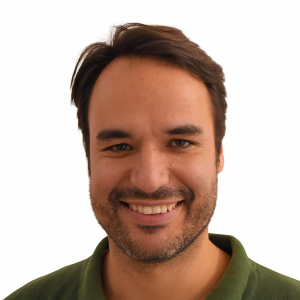
Stephan Schaller, PhD
Stephan Schaller is a Systems Scientist passionate about Model Based Drug Discovery, Development and Dosing (MI4D) with over eight years of industry experience. His experience ranges from target validation in the early phases of drug discovery to development of automated decision support systems for drug dosing at the point of care.
Stephan Schaller founded ESQlabs GmbH to advance the integration of computational methods in healthcare to derive effective computational platforms for drug-, device- and treatment-development and -optimization (i.e. personalization).
During his time in industry, he has leveraged physiologically-based concepts for decision-making support to drug discovery and development teams in various therapeutic areas, including oncology, immunology, hematology, cardiovascular and metabolic disease.
Stephan Schaller studied Control Systems Engineering and Systems Biology at the University of Stuttgart, Germany and received his PhD from the RWTH Aachen University, Germany in collaboration with Bayer in Computational Engineering for the development of an automated decision support system for insulin dosing in type 1 diabetes patients.
- Development of an end-to-end Quantitative Model-Informed Drug Development (MIDD) ECOSYSTEM
- Systematic evaluation of high-throughput PBK modelling strategies for the prediction of intravenous and oral pharmacokinetics in humans
- Local depletion of large molecule drugs due to target binding in tissue interstitial space
- Towards Predictions of Clinical Trial Outcomes: Combining PBPK and QSP within a Translational Diabetes PB-QSP Disease Platform
- Machine-Learning Aided Multi-Scale Modelling Framework for Toxicological Endpoint Predictions in the Dog
- A Generic Integrated Physiologically based Whole-body Model of the Glucose-Insulin-Glucagon Regulatory System
- Considering developmental neurotoxicity in vitro data forhuman health risk assessment using physiologicallybased kinetic modeling: deltamethrin case study
- Evaluation of BCRP‑Related DDIs Between Methotrexateand Cyclosporin A Using Physiologically Based PharmacokineticModelling
- Evaluation of the drug-drug interaction potential of treosulfan using a physiologically-based pharmacokinetic modelling approach
- A generic avian physiologically-based kinetic (PBK) model and itsapplication in three bird species
- Using Physiologically Based Absorption Modeling toassess the failing bioequivalence of ziprasidone capsules.
- A review of OSP suite PBBM capabilities: looking ahead
- Reproductive toxicity in birds predicted by physiologically-based kinetics and bioenergetics modelling
- Considering developmental neurotoxicity in vitro data for human health risk assessment using physiologically-based kinetic modeling: deltamethrin case study
- A generic avian physiologically-based kinetic (PBK) model and its application in three bird species
- Application of High-Throughput PBPK Modeling to Develop an IVIVE Approach for Oral Permeability
- Harnessing Open-Source Solutions: Insights From the FirstOpen Systems Pharmacology (OSP) Community Conference
- Harnessing Open-Source Solutions: Insights From the First Open Systems Pharmacology (OSP) Community Conference
- Local depletion of large molecule drugs due to target binding in tissue interstitial space
- Whole-Body Physiologically Based Pharmacokinetic Modeling Framework for Tissue Target Engagement of CD3 Bispecific Antibodies
- Enhancing PB(P)K Models for the Female Reproductive Tract: A Framework for Local and Systemic Drug Kinetics
- Advancing Maternal-Fetal and Lactation PBK Models for Cross-Species Risk Assessment in Toxicology
- Systematic evaluation of high-throughput PBK modelling strategies for the prediction of intravenous and oral pharmacokinetics in humans
- High-Throughput PBPK Framework in R using Open Systems Pharmacology Software for Anti-Tuberculosis Drug Development
Vanessa Baier
Vanessa Baier is bioinformatician by training, with a focus on computational modeling in the field of systems biology/systems pharmacology. She has experience with lab data management tools, Bayesian population PBPK techniques, and the contextualization of in vitro data and mechanistic PBPK models. Her main area at ESQlabs lies in vitro/in vivo extrapolation and toxicity modeling within PBPK QSP
Vanessa Baier studied computer science at TU Braunschweig and Bioinformatics at Goethe University Frankfurt. After an internship at Sanofi, she completed her master thesis at Bayer in the group of Complex Systems Modeling / Applied Mathematics. She then joined the group of Lars Kuepfer at RWTH Aachen University to complete her PhD on PBPK modeling of drug-induced liver injury (DILI) .
- Evaluation of BCRP‑Related DDIs Between Methotrexateand Cyclosporin A Using Physiologically Based PharmacokineticModelling
- A generic avian physiologically-based kinetic (PBK) model and itsapplication in three bird species
- Reproductive toxicity in birds predicted by physiologically-based kinetics and bioenergetics modelling
- A generic avian physiologically-based kinetic (PBK) model and its application in three bird species

